Ashore to nest
Females return to land to lay eggs in sand, often at night. Hatchlings begin life on the beach before making their first swim to the sea.
Sea Turtle Conservancy reference
Large, air-breathing marine reptiles move between nesting beaches, reefs, seagrass beds, estuaries, and open ocean. This guide summarizes the seven living species for the tracking demo.
7
Living species
15-30
Years to mature
Global
Warm seas
Sea turtles have streamlined bodies and large flippers for life at sea, yet every species keeps a close tie to land: females must come ashore to nest, and hatchlings begin on beaches before entering the water.
Females return to land to lay eggs in sand, often at night. Hatchlings begin life on the beach before making their first swim to the sea.
Sea turtles migrate between feeding areas and nesting beaches, sometimes across hundreds or thousands of miles of ocean.
Fishing bycatch, marine debris, coastal development, artificial lighting, boat strikes, harvest, and climate change all affect survival.
Species guide
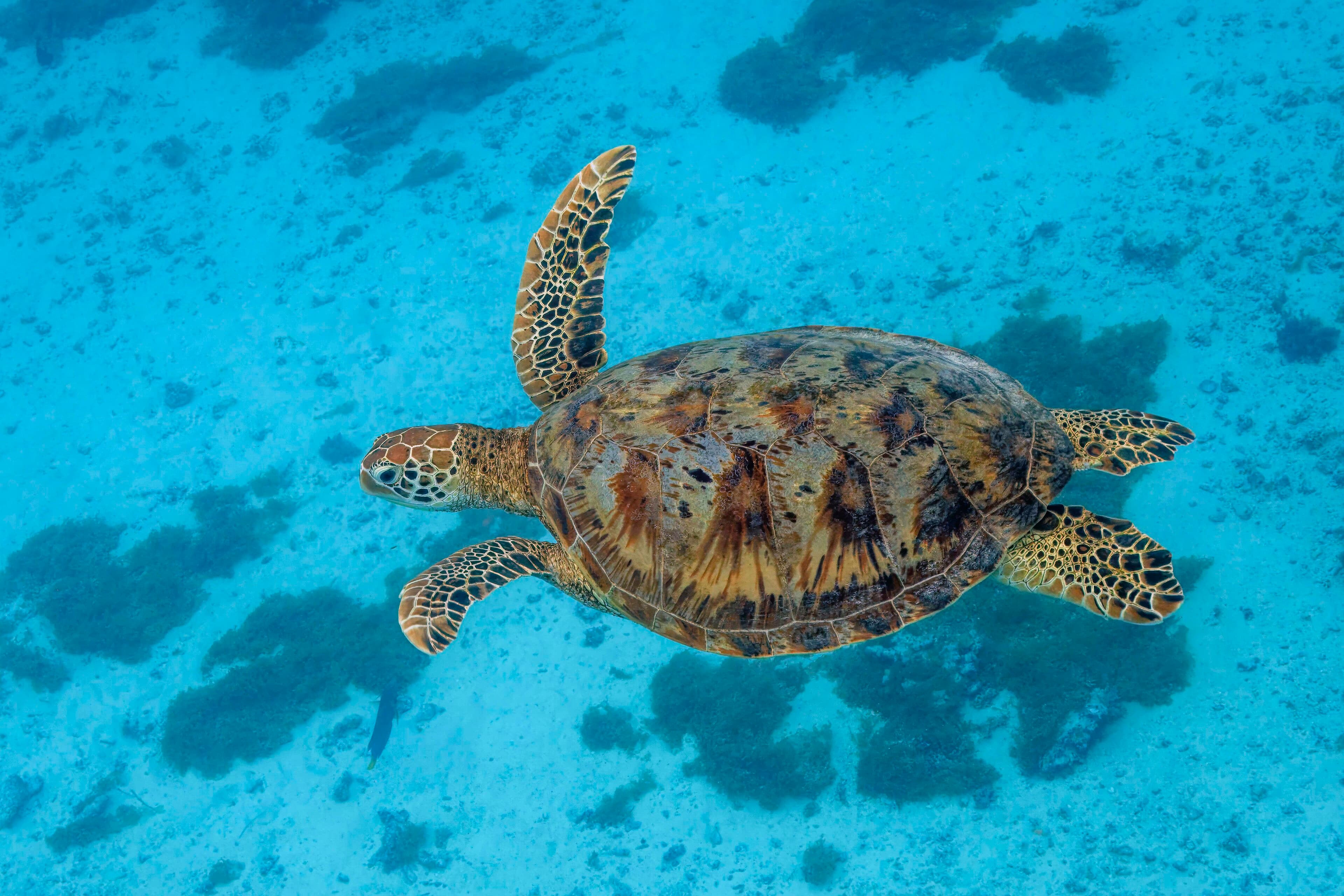
Chelonia mydas
The second-largest sea turtle is named for the green color of its body fat, which comes from a diet that shifts toward seagrass and algae as it matures.
Habitat: Coasts, islands, seagrass beds
Diet: Seagrass and algae
Status: Threatened in the U.S.
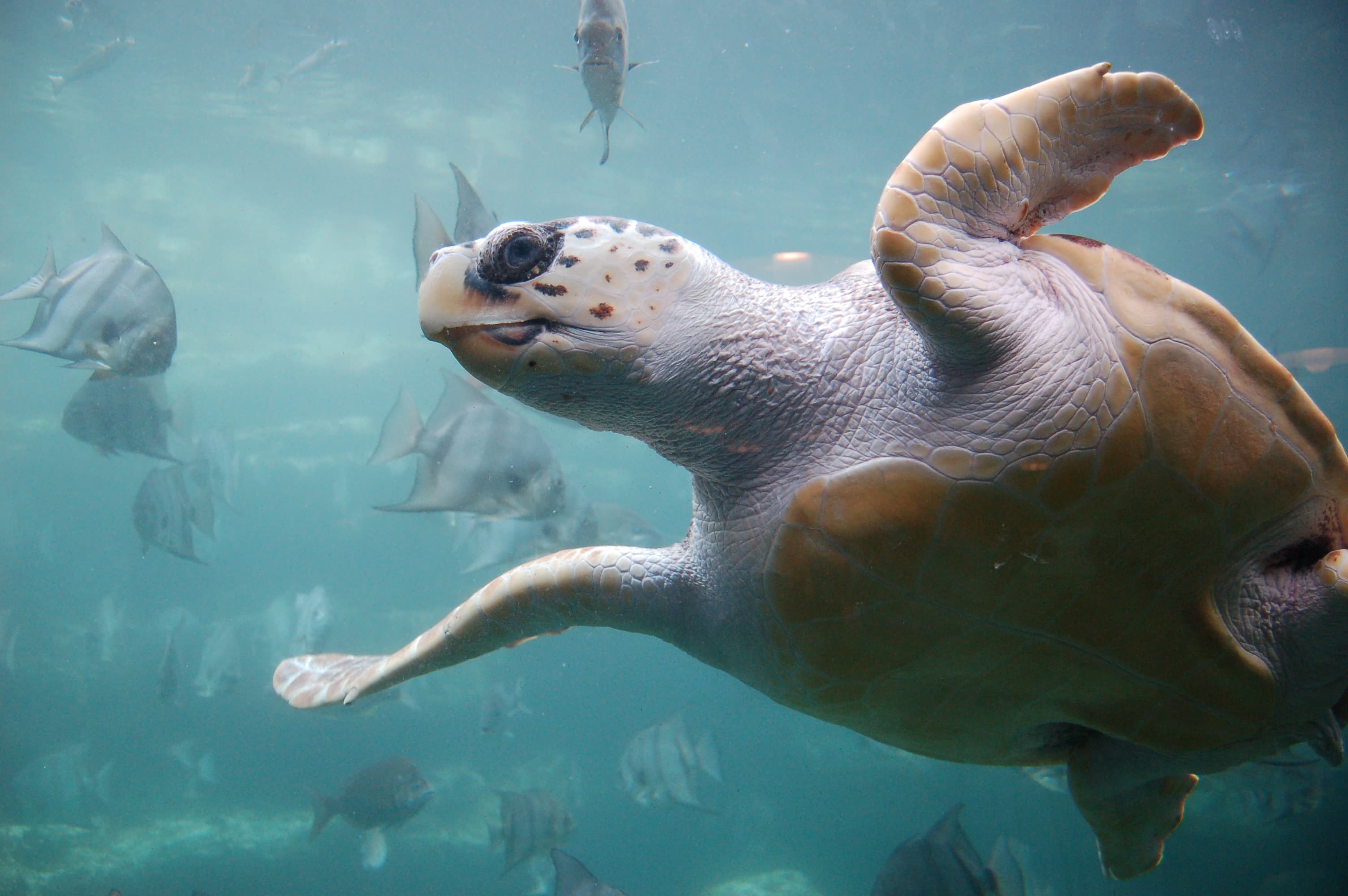
Caretta caretta
Loggerheads are built around a large head and crushing jaw muscles, an adaptation for feeding on clams, mussels, horseshoe crabs, and other hard-shelled prey.
Habitat: Bays, estuaries, continental shelves
Diet: Shellfish and invertebrates
Status: Threatened in the U.S.
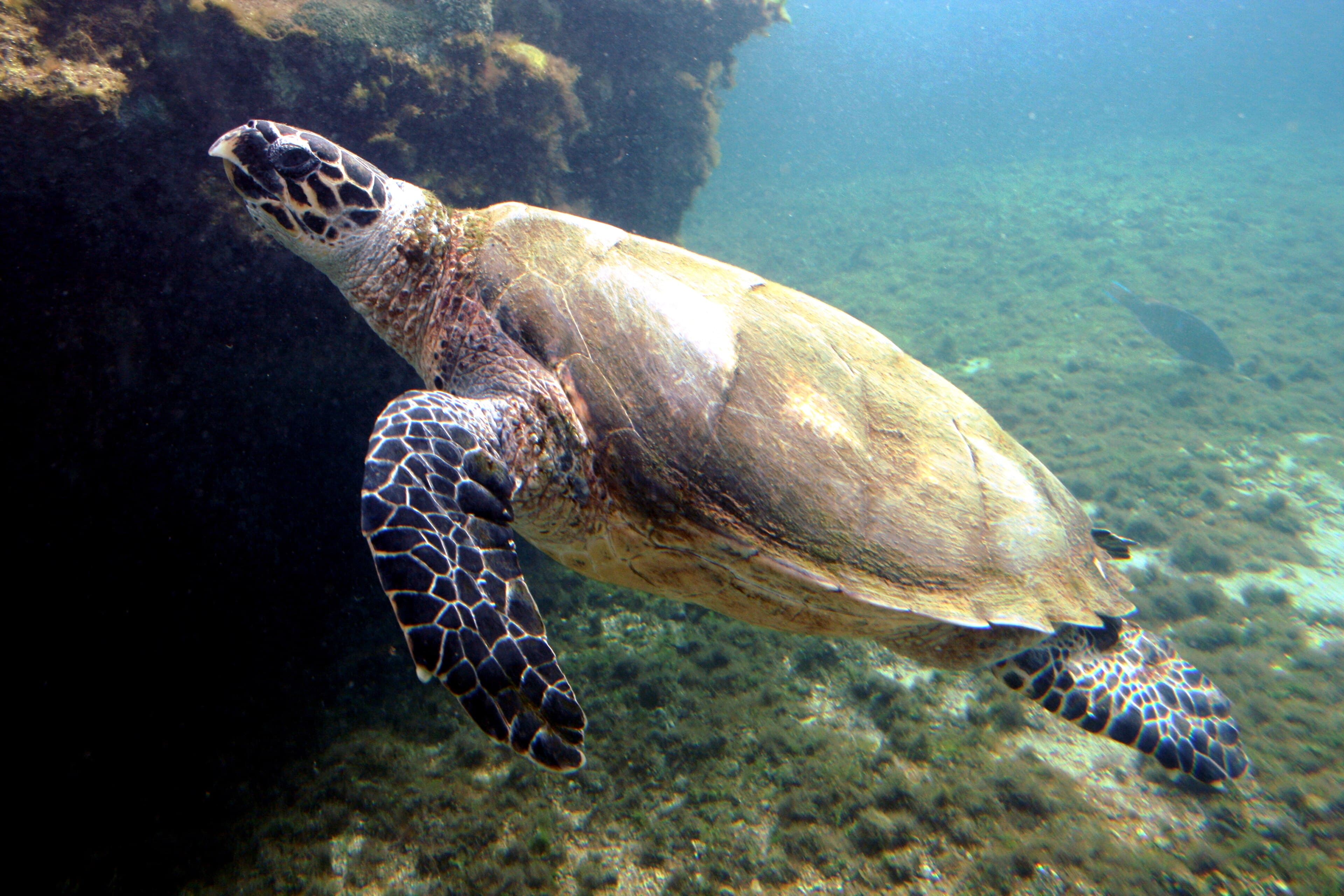
Eretmochelys imbricata
A narrow head and beak-like jaws help hawksbills reach food in reef crevices. Their patterned shells also made them targets for illegal shell trade.
Habitat: Tropical coral reefs and lagoons
Diet: Sponges, anemones, squid, shrimp
Status: Critically endangered globally
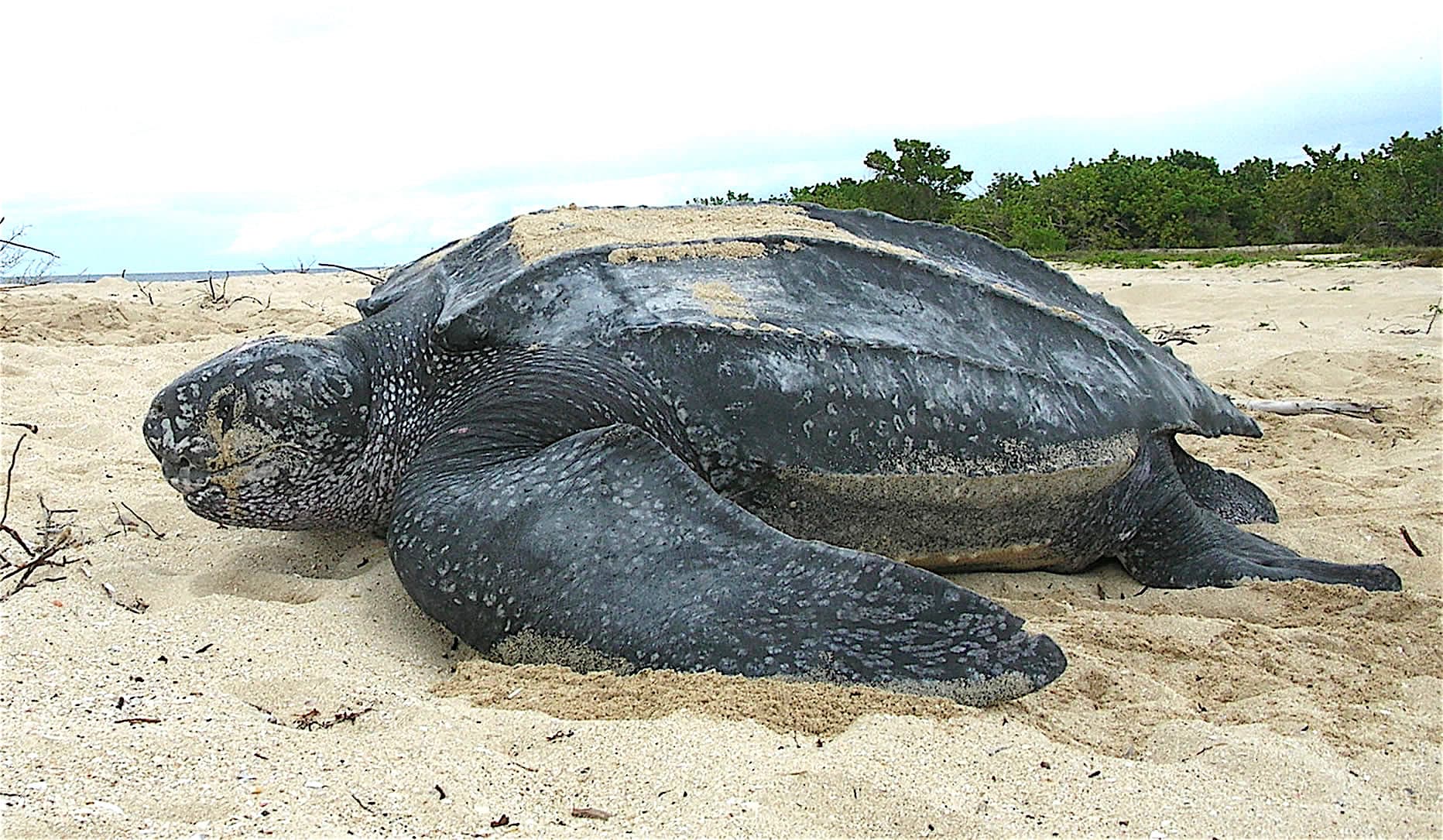
Dermochelys coriacea
Leatherbacks lack a hard shell. Their flexible, ridged, leathery carapace and ocean-scale range set them apart from every other sea turtle species.
Habitat: Open ocean, every ocean except polar seas
Diet: Jellyfish and soft-bodied prey
Status: Endangered in the U.S.
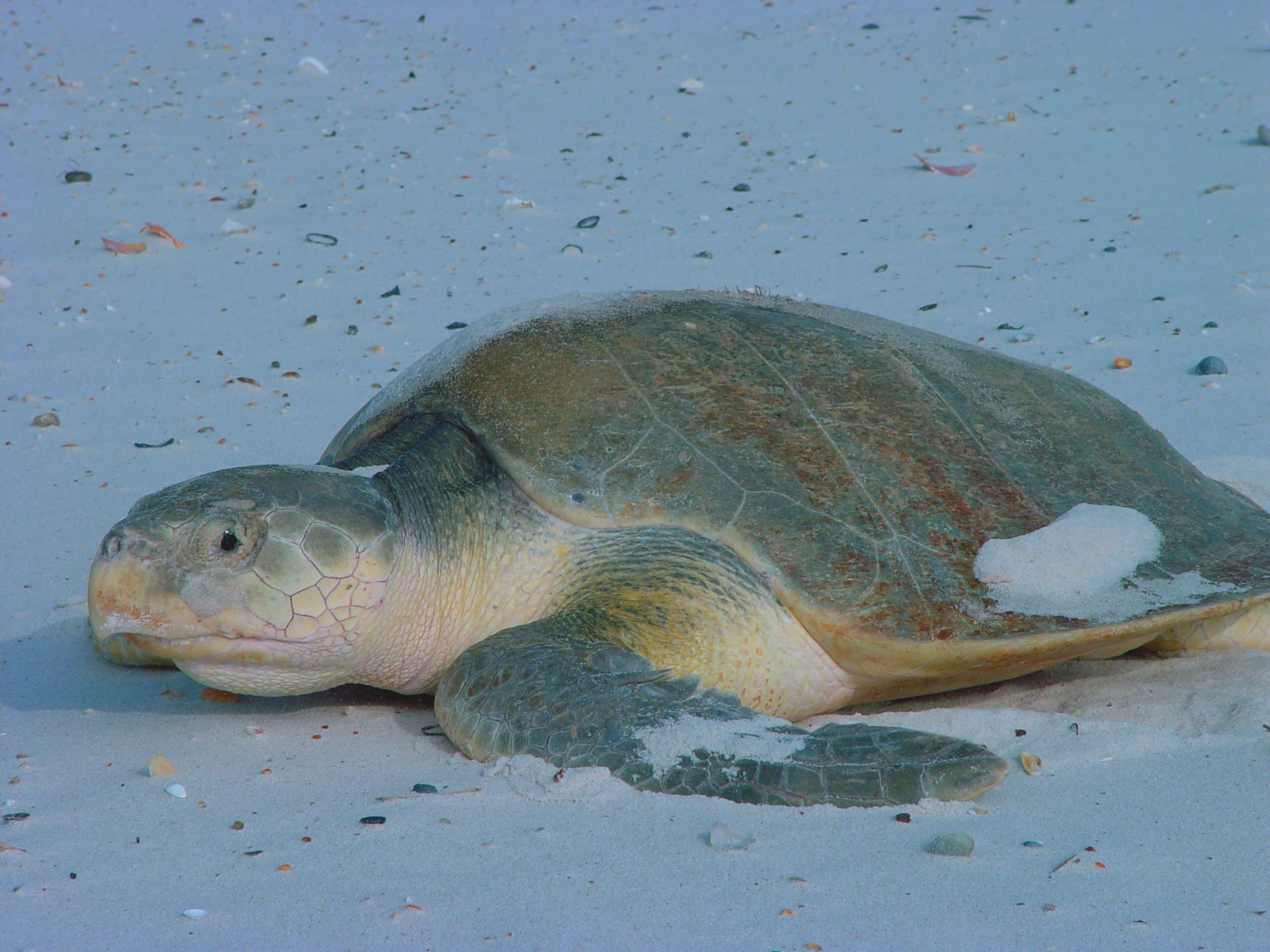
Lepidochelys kempii
Kemp's ridleys are the smallest sea turtles and are known for synchronized nesting events called arribadas, with adults mostly limited to the Gulf.
Habitat: Gulf and northwest Atlantic coasts
Diet: Crabs, clams, mussels, shrimp
Status: Critically endangered globally
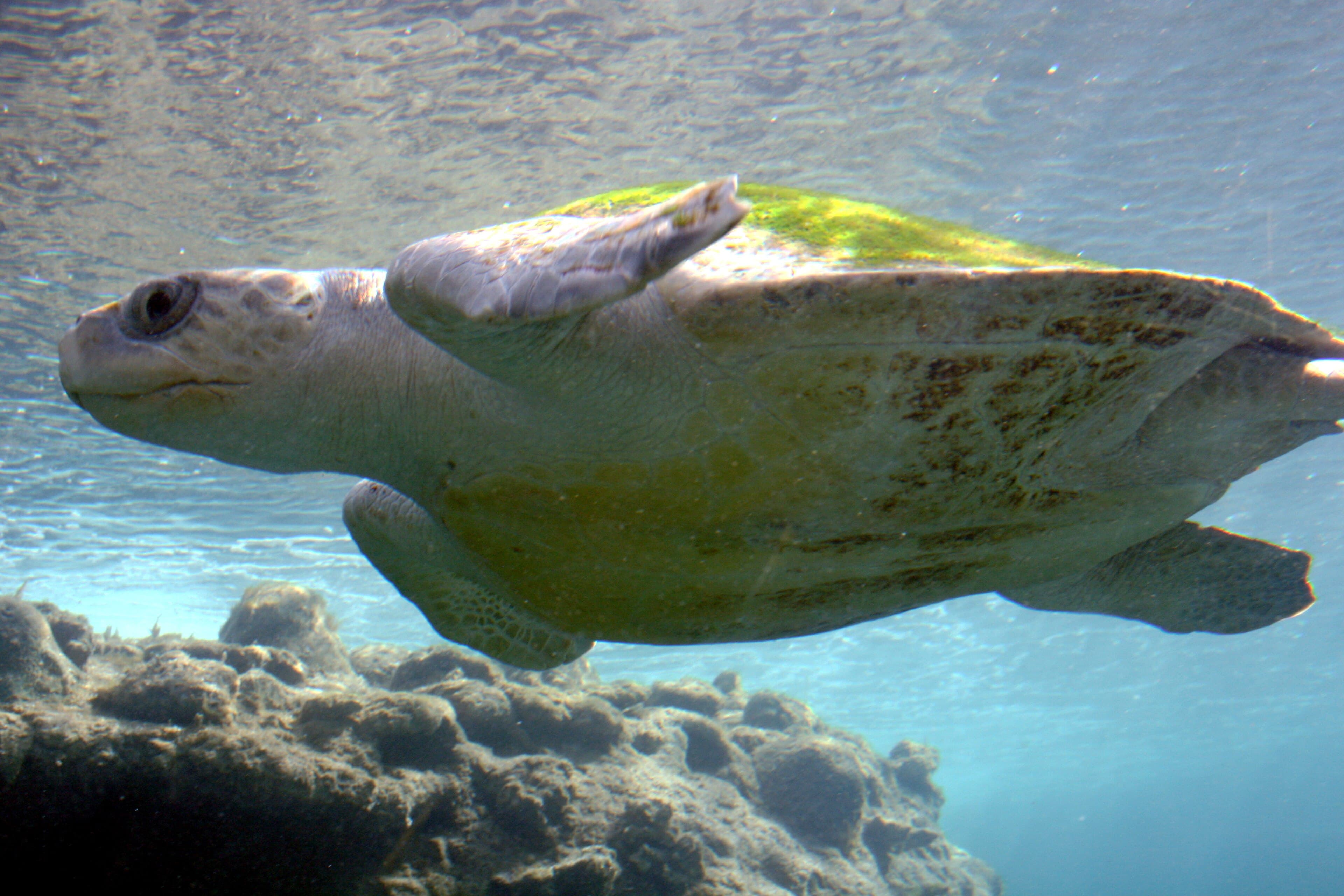
Lepidochelys olivacea
Named for its olive-green shell, this species is the most abundant sea turtle and can forage offshore as well as in coastal bays and estuaries.
Habitat: Tropical and subtropical oceans
Diet: Crustaceans, mollusks, fish
Status: Threatened in the U.S.
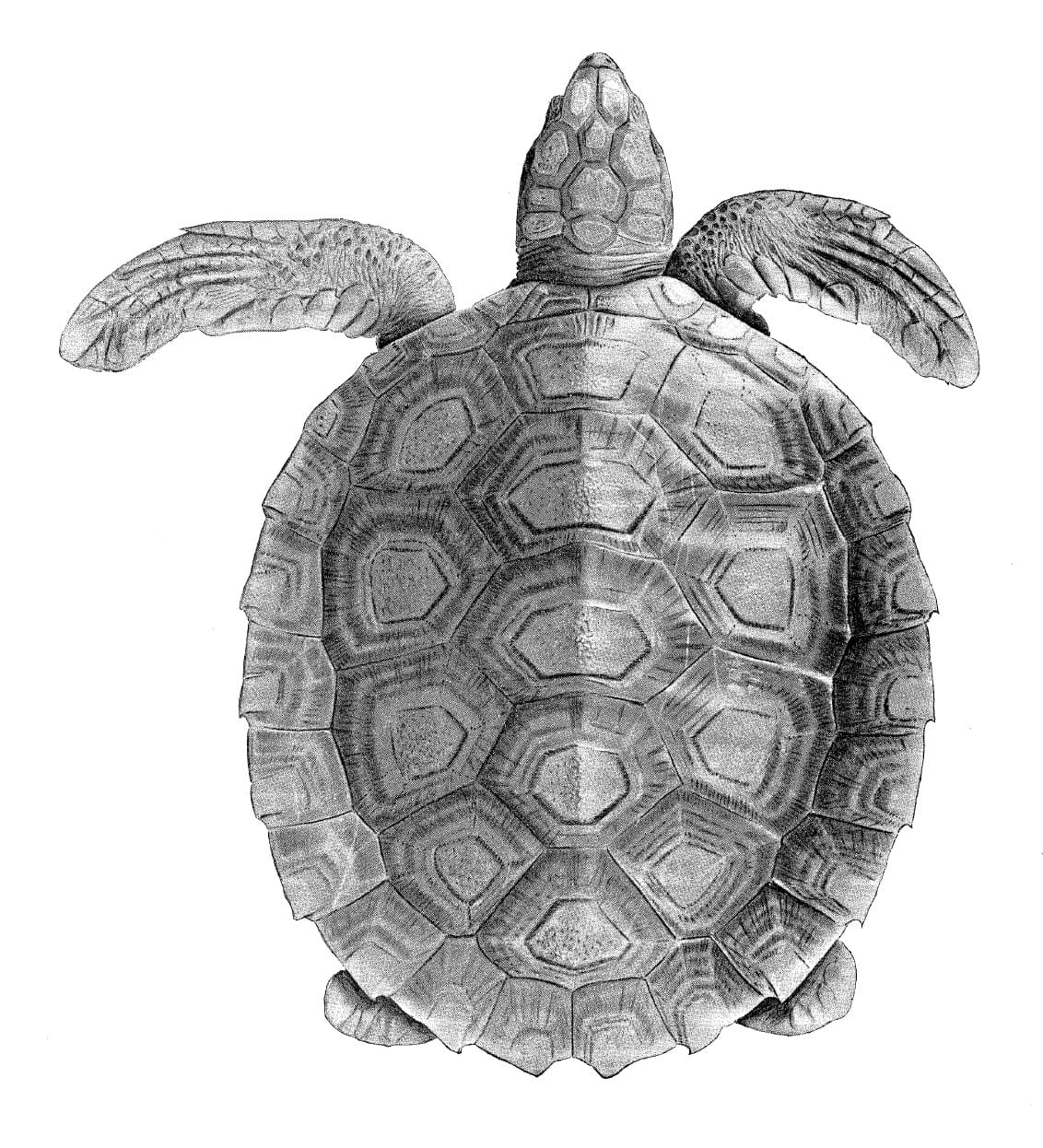
Natator depressus
Flatbacks are named for their unusually flat shells and have the narrowest range of the seven species, staying around northern Australia and Papua New Guinea.
Habitat: Australia and Papua New Guinea waters
Diet: Sea cucumbers, jellyfish, mollusks
Status: Data deficient globally
Keep nesting beaches dark, quiet, and clear of obstacles at night.
Watch wild turtles from a respectful distance; never touch, chase, or feed them.
Reduce single-use plastics and remove fishing line, bags, and other debris from beaches.
Report stranded, injured, or entangled turtles to local wildlife responders.
Educational demo content summarized from Sea Turtle Conservancy species and sea turtle education pages. It is not live tracking or a conservation partnership claim.